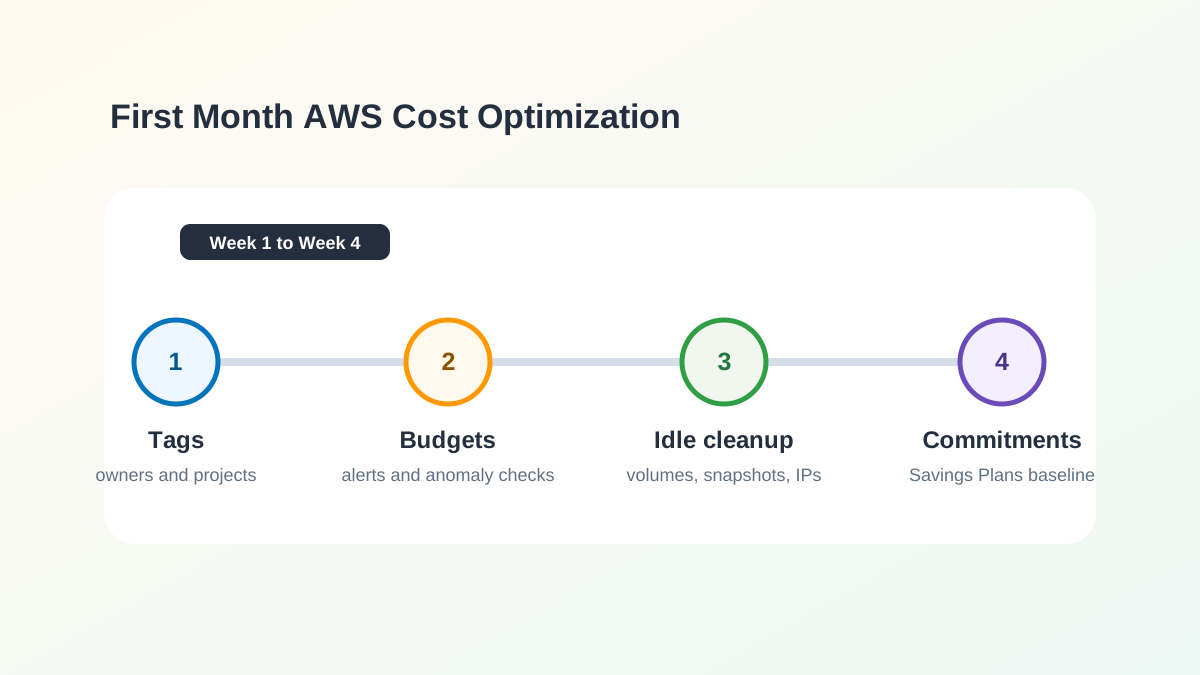
Week one: make the bill explainable
The first step is not cutting resources. It is making spend explainable by team, product, environment, and business line. Start with a tagging strategy and require owner, environment, project, and cost-center tags in the resource creation flow.
Enable budgets and abnormal usage alerts at the same time. Initial thresholds can be conservative because the goal is to find unexpected growth quickly, not to create a perfect policy on day one.
Week two: remove obvious waste
Common low-risk actions include releasing unattached EBS volumes, deleting expired snapshots, stopping long-idle instances, reducing log retention, checking NAT Gateway traffic, and cleaning unused Elastic IP addresses.
These changes usually do not require architecture redesign, but they still need a change record and rollback path. Production resources should have an owner and business window confirmed before deletion or downsizing.
Weeks three and four: consider commitments
Savings Plans and Reserved Instances are useful for stable workloads, but they should not hide waste. Review 30 to 90 days of hourly usage, identify the baseline, and then choose a commitment percentage.
For seasonal commerce, game events, or AI batch workloads, model stable services separately from elastic peaks so overcommitment does not lock in future cost.
Takeaways
- Start with tags, budgets, and anomaly alerts.
- Confirm owners and rollback paths before cleanup.
- Use commitments only for stable and predictable baseline usage.