Start with knowledge sources and permission boundaries
Enterprise knowledge base projects should not begin with the model call. First confirm which documents can be indexed, which department owns them, who may access them, how often they change, and whether sensitive information is included. S3 is a practical layered storage entry point for raw files and cleaned text.
When multiple teams use the same knowledge base, indexes, metadata, and retrieval filters must represent department, project, customer, and confidentiality level. Otherwise the answer may be correct while exposing content to the wrong user.
A practical first-version flow
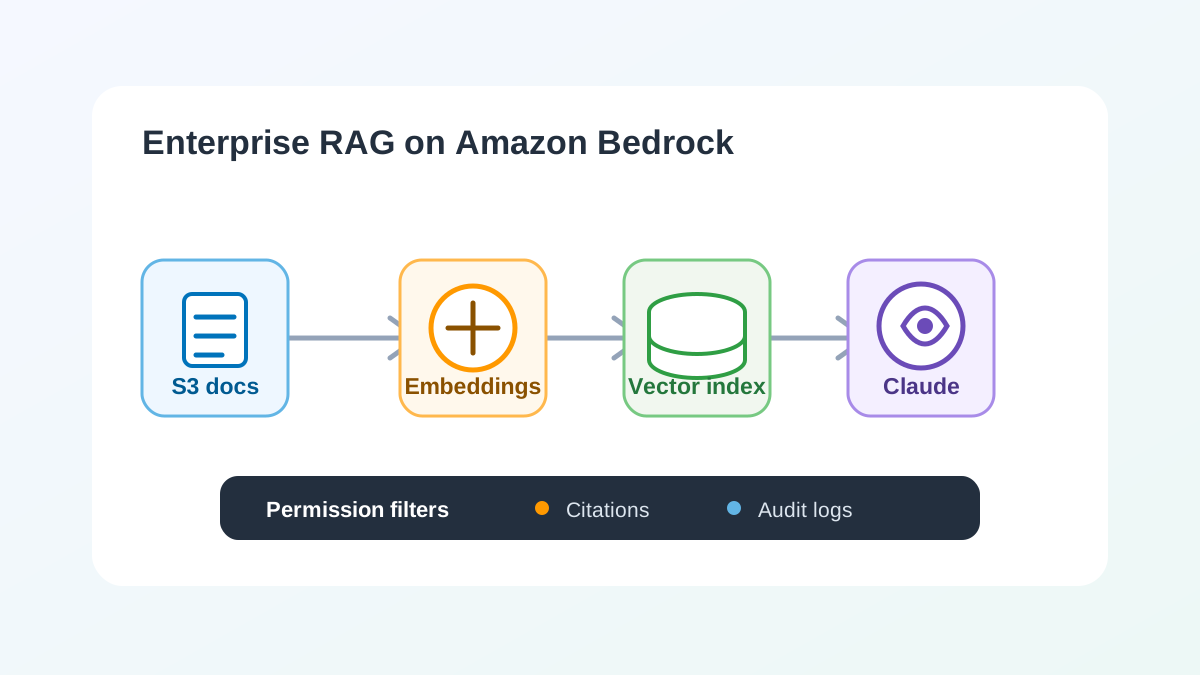
A common flow uploads documents to S3, triggers cleaning and chunking, generates embeddings, and writes them to OpenSearch Serverless or another vector store. At query time, apply permission filters and semantic retrieval before passing chunks, citations, and the user question to Claude.
A first version does not need complex agent behavior. It is usually safer to show citations, update times, and confidence boundaries first, then add multi-step task execution after retrieval quality is proven.
Production readiness means audit, latency, and cost
Production systems should log user, question, retrieved chunks, model version, output, and feedback while avoiding unnecessary sensitive source text in logs. For high-frequency workloads, caching, batch embedding, tiered indexes, and prompt compression help manage latency and cost.
Private access, KMS encryption, VPC endpoints, and CloudWatch metrics usually belong in the launch review so the knowledge base can answer business questions while meeting enterprise security expectations.
Takeaways
- Govern document permissions before model integration.
- First-version RAG should show citations and update times.
- Audit, latency, and cost need design attention before launch.