Start with global access and security entry points
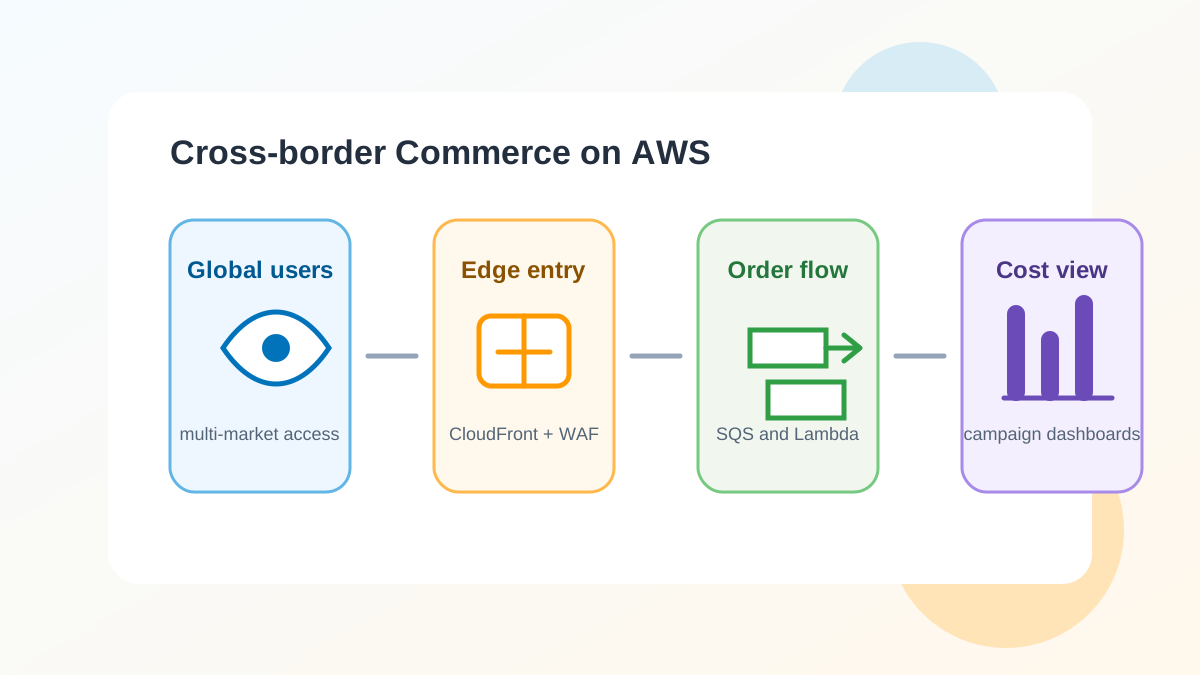
Cross-border commerce usually faces multi-region users, campaign peaks, and crawler traffic. A first version can use CloudFront for static assets and edge caching, while AWS WAF handles managed rules, rate limits, and malicious request filtering.
If the origin runs in one region, evaluate latency from target markets to that region early. For payment, login, and order APIs, caching policies need careful boundaries so dynamic or sensitive responses are never cached at the edge.
Decouple order and inventory flows
During campaigns, order, inventory, risk control, email, logistics, and marketing systems often spike together. EventBridge, SQS, and Lambda can split synchronous chains into retryable and observable asynchronous tasks.
Database choices depend on consistency needs. Some high-concurrency read and write patterns can use DynamoDB and Global Tables, while finance, payment, and settlement data still need explicit transaction boundaries and audit requirements.
Prepare peak and cost playbooks before launch
Before campaigns, load test critical APIs and confirm autoscaling, database connection pools, throttling policies, and alert thresholds. Without test data, relying only on emergency quota increases is risky.
For cost, separate dashboards for CDN, data transfer, databases, logs, and campaign resources. After campaigns, release temporary capacity promptly so peak configuration does not remain in production.
Takeaways
- Use CloudFront and WAF at the entry layer while defining dynamic API cache boundaries.
- Order, inventory, and notification flows are good candidates for asynchronous decoupling.
- Prepare load tests, alerts, and temporary resource cleanup before campaigns.